

Table of Contents
- Why Graphic Tees Crack After Washing
- How to Wash Graphic Tees Properly
- Drying Techniques: Air Dry vs Machine Dry
- Storage and Folding Techniques for Long-Term Protection
- How to Fix Cracked Screen Print
- Common Mistakes That Speed Up Print Deterioration
- Conclusion
Why Graphic Tees Crack After Washing
Graphic tees crack after washing because the ink or print layer experiences stress that the fabric underneath cannot absorb. Heat, mechanical agitation, chemical exposure, and printing technology all contribute to this damage. The print on a graphic tee isn't woven into the fabric like traditional dyes, it sits on top, bonded through heat or adhesive. When you wash the shirt, water temperature, detergent chemistry, tumble action, and friction from other garments weaken the print layer. The result: cracks that spread over time, turning a beloved pet design into something barely recognizable.
The good news is that cracking isn't inevitable. Most damage happens because people don't realize how differently graphic tees need to be treated compared to regular cotton shirts. The steps you take before, during, and after washing make an enormous difference in how long your favorite designs stay vibrant.
How Print Technology Affects Durability
Different printing methods have different vulnerabilities. Screen printing, the most common method, creates a thick ink layer that sits on the fabric surface (peer-reviewed research). This ink has elasticity and can stretch slightly with the fabric, but when water and detergent break down the polymer bonds holding the ink together, that elasticity fails and the ink becomes brittle.
Direct-to-garment printing applies ink directly onto the fabric using inkjet technology. While this creates a thinner layer that bonds more intimately with the fibers, it's actually more vulnerable to chemical damage from harsh detergents or high heat.
Heat transfer printing uses a design printed onto transfer paper, then pressed onto the fabric using heat. The adhesive bonding the transfer to the shirt can fail if exposed to excessive heat or if the initial curing process wasn't complete. This is why heat transfer prints often crack first.
Understanding your shirt's print technology matters because each type requires slightly different care. A screen-printed pet design needs protection from mechanical stress during washing but can handle cold water well. Heat transfer prints need gentler handling overall and should never see a hot dryer.
The Role of Heat and Thermal Stress
Heat is one of the primary culprits behind cracked graphic tees. When you wash a shirt in hot water, the fabric expands at a different rate than the print layer (peer-reviewed research). This differential expansion creates stress at the boundary between the ink and the fabric. Repeated heating cycles compound this stress until the ink layer fractures.
If the print wasn't cured properly at the factory, the polymer chains in the ink aren't fully cross-linked. Those weak bonds break down faster when exposed to additional heat during washing, which is why some graphic tees seem to crack almost immediately.
Machine drying is where most people unknowingly destroy their graphic tees. The high heat creates intense thermal stress, and the mechanical tumbling compounds the problem. Even moderate heat can cause micro-cracks that spread with subsequent washes. Air drying eliminates this entirely, which is why it's the gold standard for preserving graphic tees.
Chemical Damage from Detergent and Fabric Softener
Detergents contain enzymes and surfactants designed to break down dirt and oils (the FDA). Those same chemicals can break down the polymer bonds holding screen print ink to the fabric. Harsh detergents are particularly destructive because they're more aggressive at breaking molecular bonds.
Fabric softener is a silent killer of graphic tees. The waxy coating designed to reduce friction interferes with the bond between the print and the fiber, causing the ink to peel or crack. Many people use fabric softener to protect their clothes, not realizing it does the opposite for printed designs.
Bleach and oxygen-based cleaners can chemically alter the ink itself, causing discoloration and brittleness. Even small amounts of bleach exposure can weaken the print layer. Hard water, which contains dissolved minerals, can interact with detergent and ink in ways that promote degradation. Soft water is gentler on prints.
How to Wash Graphic Tees Properly
Washing graphic tees correctly is straightforward once you know the principles. The goal is to minimize thermal stress, mechanical agitation, and chemical exposure while still getting the shirt clean.
Step 1: Prepare Your Shirt Before Washing
Turn your graphic tee inside out before washing. This simple step reduces friction between the print and other garments or the washing machine drum. When the printed side faces inward, the blank back experiences the mechanical stress instead of the design.
Check the care label on the shirt. Most quality graphic tees include specific washing instructions based on how that particular print was applied and cured.
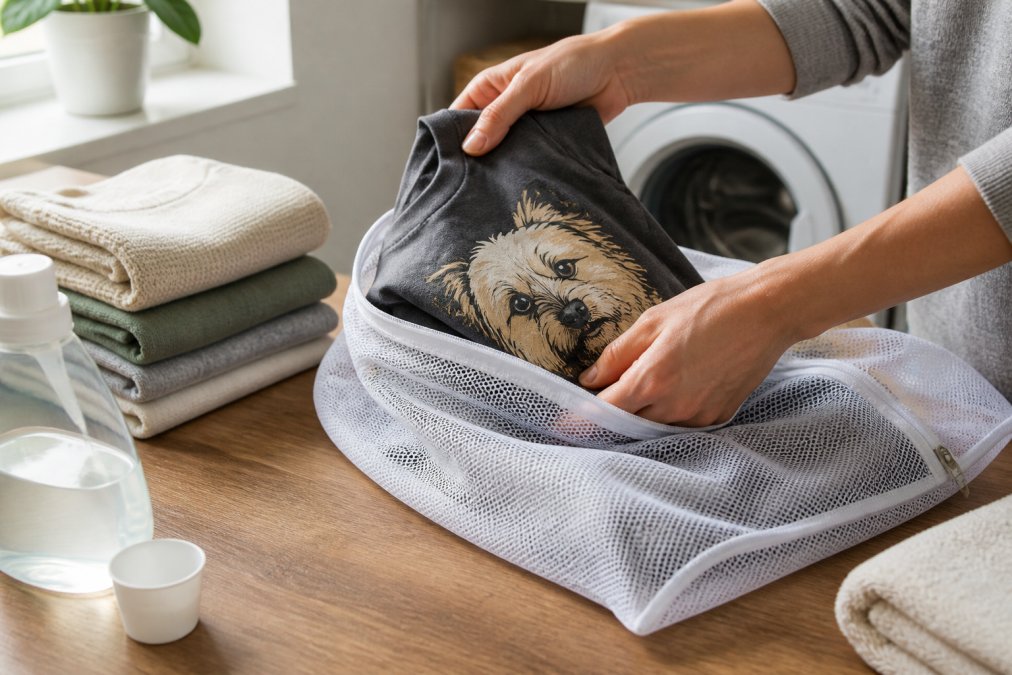
Place the shirt in a mesh laundry bag if possible. A mesh bag creates a barrier between the shirt and the washing machine's agitator or drum, reducing physical impact while still allowing water and detergent to reach the fabric.
Step 2: Choose the Right Washing Machine Settings
Use the delicate or gentle cycle on your washing machine. This cycle reduces spin speed and agitation intensity, minimizing mechanical stress on the print.
Set the water level to low if your machine has that option. Less water means less weight pressing down on the shirt during the spin cycle and less tumbling during the wash.
Avoid the heavy-duty or normal cycles entirely. These are designed for sturdy fabrics like towels and jeans and are far too aggressive for printed designs.
Step 3: Select Cold Water and Gentle Detergent
Cold water is non-negotiable for graphic tees. Hot water accelerates degradation of both the ink and fabric fibers. Cold water cleans effectively while eliminating thermal stress entirely.
Use a gentle, fragrance-free detergent specifically formulated for delicate fabrics. Avoid heavy-duty detergents and anything labeled "extra strength" or "enzymatic." Look for detergents that are sulfate-free and pH-neutral.
Never use fabric softener. Skip it entirely for graphic tees. Measure detergent carefully, use about half the amount you'd normally use for a regular load.
Drying Techniques: Air Dry vs Machine Dry
The drying method you choose has as much impact on print longevity as the washing method.
Air drying is the best approach for graphic tees. Hang the shirt on a clothesline, drying rack, or hanger in a well-ventilated area. Avoid direct sunlight, which can fade the print. A shaded, breezy location is ideal.
If you must use a dryer, use the lowest heat setting available and run it for just 10-15 minutes, then remove the shirt while it's still slightly damp. Never use high heat.
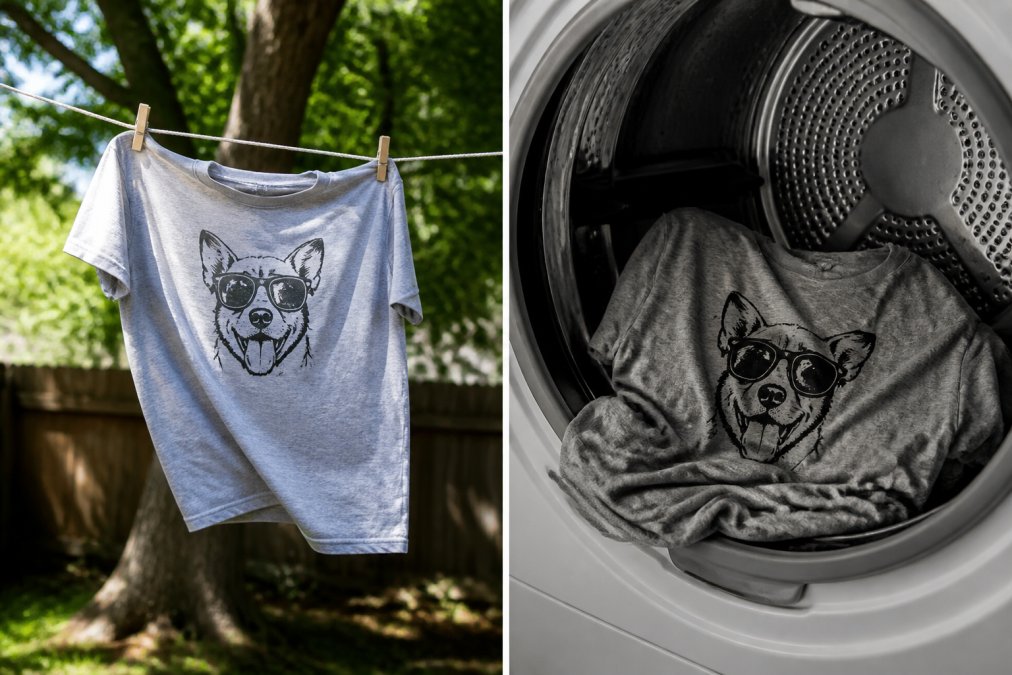
Flat drying is an excellent alternative if you don't have outdoor space. Lay the shirt flat on a clean, dry surface and allow it to air dry. This method prevents the stretching that can occur with heavy, wet garments hanging from a clothesline.
Never wring out your graphic tee. The twisting motion can cause the print to crack. Instead, gently squeeze out excess water by hand or wrap the shirt in a clean towel and press to remove moisture.
Storage and Folding Techniques for Long-Term Protection
How you store your graphic tees matters almost as much as how you wash them.
Fold your graphic tees carefully along the seams rather than across the printed design. Folding across the print creates creases in the ink layer that can initiate cracks. Store folded shirts in a cool, dry location away from direct sunlight.
Avoid hanging graphic tees for long-term storage if possible. The weight of the wet or damp shirt can stretch the neckline and cause the print to crack at stress points.
Stack graphic tees with the printed side facing up or down consistently to prevent prints from rubbing against each other. Keep them away from heat sources, humidity, and pests. A climate-controlled closet is ideal.
Avoid plastic storage containers for long-term storage. Plastic can trap moisture and promote mildew growth. Breathable fabric storage boxes or open shelving in a closet is better.
How to Fix Cracked Screen Print
Minor Cracks: Stabilizing and Preventing Spread
Small cracks in the print layer can be stabilized to prevent them from spreading. Fabric glue can help stabilize minor cracks by sealing them and preventing water from seeping underneath the ink.
A fabric paint pen that matches the print color can cover small cracks cosmetically. For pet-themed designs, a small patch can sometimes be applied over the cracked area.
Severe Damage: When Repair Isn't Practical
If the print has large cracks, significant peeling, or widespread damage, repair may not be practical. The shirt can be repurposed for other uses where aesthetic quality matters less, or recycled if your local program accepts textile waste.
Prevention is far more cost-effective than repair. A shirt that's cared for properly can maintain its print quality for years.
Common Mistakes That Speed Up Print Deterioration
Using hot water is the single most common mistake. Cold water works fine and protects your graphic tees.
Overcrowding the washing machine increases friction and agitation. Wash graphic tees in smaller loads to give them space.
Washing graphic tees with heavy items like jeans or towels causes excessive friction. Wash graphic tees with lighter, similarly colored items or alone.
Using too much detergent leaves residue that can trap moisture. Use a small amount of gentle detergent.
Ignoring care labels is a mistake. Follow manufacturer recommendations based on how that particular print was applied and cured.
Storing graphic tees in damp environments promotes mildew and moisture damage. Ensure your storage area is dry and well-ventilated.
Folding graphic tees across the print creates creases that can initiate cracks. Fold along the seams instead.
Graphic tees are an investment in self-expression, especially pet-themed designs that celebrate your bond with your furry companion. The difference between a shirt that lasts for years and one that deteriorates in months comes down to how you treat it. Protect that investment by washing in cold water on a gentle cycle, air drying instead of machine drying, and storing properly. Your favorite pet designs will stay vibrant and wearable for years to come when you give them the care they deserve. Shop FurEver Tees and discover graphic tees designed to last.
Frequently Asked Questions
How do I stop my graphic tees from cracking?
Prevent cracking by washing in cold water on a delicate cycle, turning shirts inside out, and air drying instead of using a tumble dryer. Avoid fabric softener and excessive detergent, which weaken ink adhesion. Store folded flat rather than hanging to reduce mechanical stress on the print. These practices protect both screen-printed and direct-to-garment designs from polymer degradation and thermal stress.
Can I put graphic tees in the dryer?
High heat from machine drying accelerates ink degradation and causes adhesive failure in screen printing. If you must use a dryer, select the lowest heat setting or air-dry cycle. Better yet, hang or lay graphic tees flat to air dry. Heat transfer and direct-to-garment prints are especially vulnerable to thermal stress, so avoiding the dryer altogether extends print durability significantly.
Is there a way to fix cracked graphic tees?
Minor cracks can be stabilized with fabric glue applied carefully to the back of the shirt to prevent further spread, though the crack itself remains visible. For severe damage, professional restoration is rarely cost-effective. Prevention through proper washing, drying, and storage is far more practical than repair. Once polymer degradation or adhesive failure occurs, the print cannot be fully restored to its original appearance.
Should you wash graphic tees before wearing them?
Yes, washing before first wear removes excess dyes and loose fibers, which can reduce cracking. Use cold water on a delicate cycle with minimal detergent. This initial wash also helps the fabric settle. However, avoid hot water or heavy agitation, as these can damage the print during the curing process if the shirt is brand new. Gentle, cold washing is safe and beneficial.
This article was written using GrandRanker