

Table of Contents
- Start With the Fabric: What High Quality Cotton Feels Like
- Staple Length and Yarn Count: The Hidden Details
- Ring-Spun vs Carded Cotton: Why the Difference Matters
- What Is GSM in T-Shirts and How It Affects Quality
- Inspect the Stitching and Seams Before You Buy
- How to Wash Graphic Tees Properly to Make Them Last
- Spotting Synthetic Blends and Poor Craftsmanship
- Conclusion: Trust Your Hands and the Label
- Frequently Asked Questions
Last Updated: September 5, 2026
Start With the Fabric: What High Quality Cotton Feels Like
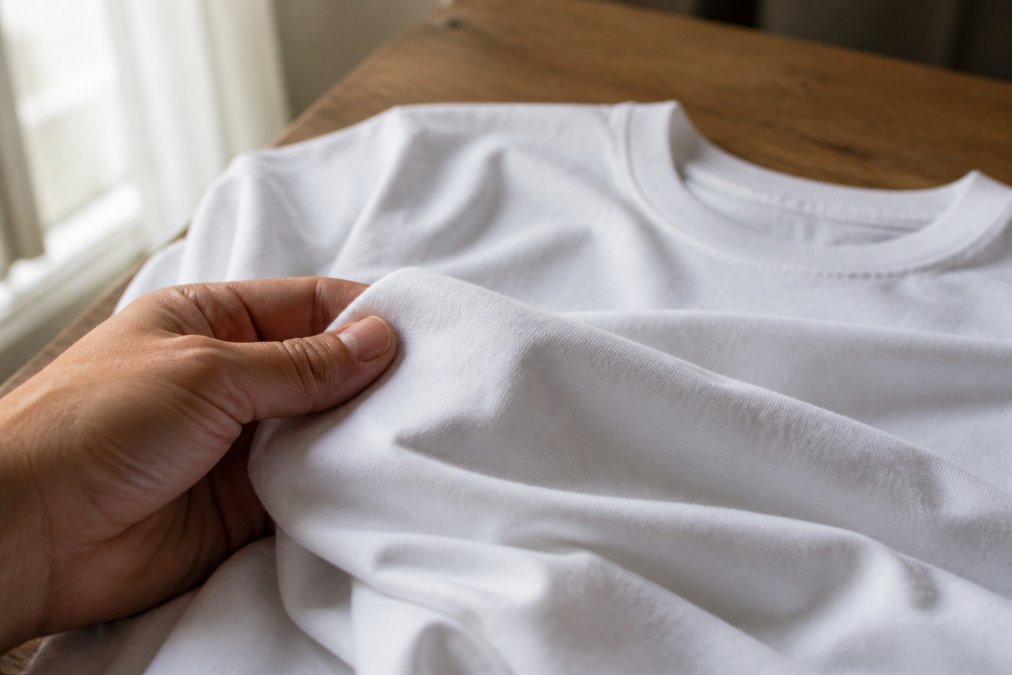
High quality cotton t-shirts are defined by a dense, smooth hand-feel that feels substantial without being stiff. But "hand-feel" is abstract. To make it concrete, use these three tactile tests you can perform in-store or the moment a package arrives.
The Pinch Test: Pinch a small fold of fabric between your thumb and forefinger and rub it gently. Premium cotton should feel thick yet soft, with a slight resistance that indicates tight weaving. Low-quality fabric will feel thin, papery, or almost insubstantial. A good rule of thumb: if the pinch is less than 1/8 of an inch thick, the fabric is likely below 130 GSM and will not hold up to regular wear.
The Light-Translucency Test: Hold a single layer of the shirt up to a bright light source. A quality tee should have enough opacity that you cannot clearly see your hand's silhouette through the fabric. If the light passes through easily and you can make out distinct shapes, the weave is too loose or the fiber is too short. This test is especially important for white and light-colored shirts, where sheerness is a common failure point.
The Drape Test: Hold the shirt by the shoulders and let it hang. A premium shirt should fall with a smooth, natural drape, following the contours of the body without clinging awkwardly or standing stiffly away from the chest. If the fabric feels board-like or has a plasticky stiffness, it may have been treated with heavy resins or starches to mask poor fiber quality, a trick used by some budget brands to simulate structure.
Run your palm across the surface; high quality cotton feels smooth and slightly cool to the touch, not rough or scratchy against your skin. This combination of density, softness, and natural movement is what separates a $30 tee from a $5 promotional shirt. The difference is not just aesthetic, it is the first measurable indicator of how the shirt will survive its first 10 washes.
Staple Length and Yarn Count: The Hidden Details
Staple length refers to the average length of the individual cotton fibers used to spin the yarn, and it is the single biggest predictor of fabric durability. Long-staple cotton, including pima and Egyptian varieties, produces smoother, stronger yarn that resists pilling and fraying far better than short-fiber cotton.
Yarn count, measured in singles, tells you how fine the spun threads are. Higher singles numbers mean finer yarn, which allows for a denser weave that feels softer against the skin. Most premium tees use combed cotton, a process that removes short fibers and impurities before spinning.
The label is your first clue. Look for terms like long-staple, combed, or ring-spun cotton, which signal that the manufacturer invested in better raw materials. Many budget brands skip these details entirely because short-staple, carded cotton is significantly cheaper to produce.
Ring-Spun vs Carded Cotton: Why the Difference Matters
Ring-spun cotton is twisted into finer, stronger yarn that produces a noticeably softer and more durable fabric than carded cotton. The spinning process aligns the fibers tightly together, which reduces the fuzzy surface that makes cheaper shirts pill after a few washes.
Carded cotton, by contrast, goes through a simpler process that leaves shorter fibers in the yarn. This creates a rougher texture that breaks down faster and loses its shape. The difference becomes obvious after several laundry cycles.
For anyone asking how textile manufacturing processes affect fabric quality about ring-spun versus carded options, the practical answer is simple. Ring-spun fabric feels smoother against your skin, drapes better, and holds its color through repeated washing. The initial cost is higher, but the shirt lasts considerably longer.
What Is GSM in T-Shirts and How It Affects Quality
GSM, or grams per square meter, measures fabric weight and directly correlates with t-shirt durability and feel. A quality everyday tee typically falls between 150 and 180 GSM, while heavier winter-weight shirts run 200 GSM and above.
Fabric below 130 GSM is usually too thin for regular wear. It tends to stretch out, become see-through, and tear easily. Premium heavyweight fabric in the 180 to 200 GSM range provides structure without feeling like cardboard.
The weight affects how the shirt performs over time. Heavier fabric holds its shape through washing, resists stretching at the collar, and provides better opacity for graphic prints. When you hold a quality tee up, the fabric should feel substantial without being stiff or uncomfortable.
Inspect the Stitching and Seams Before You Buy
Double-needle stitching at the hems and sleeves is a hallmark of well-constructed t-shirts that survive regular wear. Run your finger along the inside seams; quality shirts use flat-locked or reinforced seams that lie smooth against your skin without bulky ridges.
Taped shoulder seams are another sign of premium construction. A strip of fabric reinforcing the shoulder line prevents the shirt from stretching and sagging where it bears the most weight. This detail is common in higher-end tees but rarely found in budget options.
Check the side seams as well. Tubular construction, where the shirt is knit as a single tube with no side seams, creates a cleaner look and reduces fabric waste. The hem should be even all the way around, with no loose threads or skipped stitches visible on the inside.
How to Wash Graphic Tees Properly to Make Them Last
Washing graphic tees properly means turning them inside out and using cold water to protect both the fabric and the print. Heat is the enemy of screen-printed designs, causing cracks and fading that ruin the graphic long before the cotton wears out. But the real test of quality is not how a shirt looks on day one, it is how it behaves after 10, 20, or 50 wash cycles.
What to Expect at 10 Washes: A well-constructed tee with ring-spun, long-staple cotton should show minimal change. The collar should retain its shape without rippling, and the hem should remain even. Short-staple, carded cotton will often begin to show subtle pilling at friction points, under the arms and along the side seams.
What to Expect at 20 Washes: Premium cotton should still feel soft and substantial. The graphic may show slight fading if you have not been washing inside out, but the fabric itself should not have lost its drape. Lower-quality shirts will start to lose their shape, particularly at the shoulders and neckline, where the fabric bears the most stress.
What to Expect at 50 Washes: This is where the gap becomes dramatic. Long-staple cotton with a tight weave will still be wearable, with only minor color softening and a slightly more relaxed fit. Short-fiber cotton will often be thin, baggy, and covered in pills. The collar may have lost its elasticity entirely, and the hem may be twisted or uneven.
Air drying is the single best habit for extending t-shirt life. The mechanical action and high heat of a dryer breaks down cotton fibers and accelerates shrinkage. If you must use a dryer, choose the lowest heat setting and remove shirts while slightly damp. Pre-shrunk fabric helps, but it does not make a shirt immune to shrinkage, it only reduces the initial shock. FurEver Tees garment-dyes our shirts after construction for an authentic vintage feel, and we pre-shrink them so the fit stays consistent.
The American Cleaning Institute's fabric care guidelines recommend washing similar colors together and avoiding fabric softeners, which coat cotton fibers and reduce breathability. A common pattern among t-shirt enthusiasts is to rotate between several shirts rather than wearing the same one daily, which gives the cotton fibers time to recover their natural structure between wears.
Spotting Synthetic Blends and Poor Craftsmanship
Synthetic fibers like polyester are sometimes blended into cotton shirts to reduce cost, but this compromises breathability and comfort. A simple burn test on a loose thread can identify synthetics, though most shoppers prefer the less destructive approach of checking the label for "100% cotton."
Poor craftsmanship shows in specific places. Uneven hems, misaligned side seams, and collar bands that ripple after washing all indicate rushed production. Quality control issues like these appear within the first few washes, which is why many buyers report their shirts falling apart after only a few laundry cycles.
Colorfastness is another key indicator. Rub a white cloth across the fabric surface; if color transfers, the dye job was poor. Quality shirts use reactive dyes that bond with the cotton fibers rather than sitting on the surface.
Conclusion: Trust Your Hands and the Label
Learning how to tell high quality cotton t-shirts comes down to combining tactile testing with label literacy. Feel for density and softness, check for ring-spun or long-staple cotton, verify the GSM, and inspect the stitching before you commit.
The FTC guidelines on textile labeling require manufacturers to list fiber content accurately, which gives you a reliable starting point for evaluation. When you find a shirt that passes these checks, it will reward you with years of comfortable wear.
At FurEver Tees, we put these principles into every shirt we make. Our Fabric Textile Cat T-shirt uses 100% ring-spun US cotton with double-needle stitching and tubular construction, so you get premium quality that matches the love you have for your pet. Consumer Reports' guide to clothing durability confirms that higher-quality cotton garments consistently outperform cheaper alternatives over time.

Frequently Asked Questions
How can you tell if a t-shirt is high quality just by touch?
High quality cotton feels dense, smooth, and substantial in your hand. Rub the fabric between your fingers; premium cotton made from long-staple fibers feels soft without being slippery or thin. A quality tee will have a slight weight to it and should spring back when you stretch and release it. If the fabric feels papery, flimsy, or overly slick, it likely contains synthetic fibers or lower-grade carded cotton.
What is the difference between combed, carded, and ring-spun cotton?
Carded cotton is the baseline; it removes coarse impurities but leaves shorter fibers. Combed cotton goes further by removing short strands, leaving only smooth, long fibers. Ring-spun cotton twists those combed fibers into a finer, stronger yarn. This process creates a softer, more durable fabric that resists pilling. When you see ring-spun cotton on a label, you are getting a premium version of 100% cotton that feels broken-in from the first wear.
Does fabric weight (GSM) determine the quality of a t-shirt?
GSM, or grams per square meter, tells you a tee's density, but it alone does not define quality. A standard cotton t-shirt usually falls between 150 and 180 GSM. Premium tees often range from 180 to 220 GSM, offering a substantial feel without being heavy. A very high GSM can be stiff, while a low GSM may be see-through. Look for quality cotton with a balanced weight of around 180-200 GSM for durability and comfort.
Why does 100% cotton sometimes feel different across brands?
The label '100% cotton' only tells you the fiber content, not the fiber quality. The difference comes from the staple length of the cotton. Regular cotton uses short fibers, which create a rougher texture and cause pilling. Long-staple cotton, like pima or Egyptian cotton, creates a smoother, stronger yarn. Construction methods also matter; ring-spun and combed cotton types feel softer than basic carded cotton, even when both are technically 100% cotton.
Quality fabrics and thoughtful construction are the foundation of any great t-shirt, but the graphic matters just as much for pet lovers. FurEver Tees designs every print to celebrate the bond you share with your furry companion, using premium materials that keep your favorite designs looking sharp wash after wash. Shop the collection and feel the difference in quality cotton for yourself.
This article was written using GrandRanker