

Table of Contents
- What Makes a Graphic Tee High Quality
- Understanding T-Shirt GSM Meaning and Fabric Weight
- Fabric Composition: Ring-Spun Cotton vs. Blends
- Screen Printing vs. Direct to Garment: Which Lasts Longer
- Construction Details That Signal Quality
- How to Wash Graphic Tees Properly to Extend Print Life
- Red Flags: Signs of Low-Quality Manufacturing
- Conclusion
- Frequently Asked Questions
Last Updated: August 31, 2026
What Makes a Graphic Tee High Quality
How to spot high quality graphic tees comes down to understanding fabric construction, print durability, and garment craftsmanship. At FurEver Tees, we've analyzed what separates a shirt that lasts through dozens of washes from one that falls apart after five.
A cheap tee and a quality one might look identical on a rack, but held side by side, the distinctions become clear. Weight, texture, seam construction, and print integration all signal how long a shirt will actually last. Most people focus on price or brand name, but you need to know what to look for: specific fabric characteristics, construction methods, and print techniques that separate durable garments from disposable ones.
Understanding T-Shirt GSM Meaning and Fabric Weight
GSM stands for grams per square meter. This measurement tells you how much fabric is packed into each square inch of your shirt, and it's the single most reliable indicator of durability.
Lightweight tees measure 130-150 GSM and feel flimsy, prone to pilling, fading, and holes at stress points (peer-reviewed research). Standard weight tees fall between 150-180 GSM. Heavyweight tees, the gold standard for graphic apparel, measure 180-210 GSM or higher. A 200 GSM tee will outlast a 150 GSM shirt by years because the denser weave resists pilling, protects dyes from fading, and allows seams to withstand tension.
The FurEver Tees collection uses ring-spun heavyweight cotton exceeding 180 GSM, providing vintage softness from the first wear without sacrificing durability. When evaluating a shirt, ask the seller for the GSM. If they won't tell you, that's a red flag.
Fabric Composition: Ring-Spun Cotton vs. Blends
Not all cotton is created equal. Ring-spun cotton undergoes specialized spinning that twists fibers tightly together, creating a smoother, stronger yarn that resists pilling and holds dyes more effectively than conventional cotton (peer-reviewed research). The result is superior softness, durability, and color retention.
Conventional cotton, processed faster, creates rougher yarn. Shirts pill more easily, fade faster, and develop stiff texture over time. Blended fabrics add stretch recovery, reducing permanent stretching around the neck and armholes, but polyester doesn't age as gracefully as pure cotton and can develop a plastic-like feel.
For graphic tees, 100% ring-spun cotton is optimal. It delivers softness, durability, color vibrancy, and authentic vintage feel. FurEver Tees sources ring-spun US cotton specifically because the fabric feels premium from day one and improves with age rather than degrading.
When shopping, check the fiber content label. If it says "100% cotton," verify it's ring-spun. If the label just says "cotton" without specification, it's likely conventional.
Screen Printing vs. Direct to Garment: Which Lasts Longer
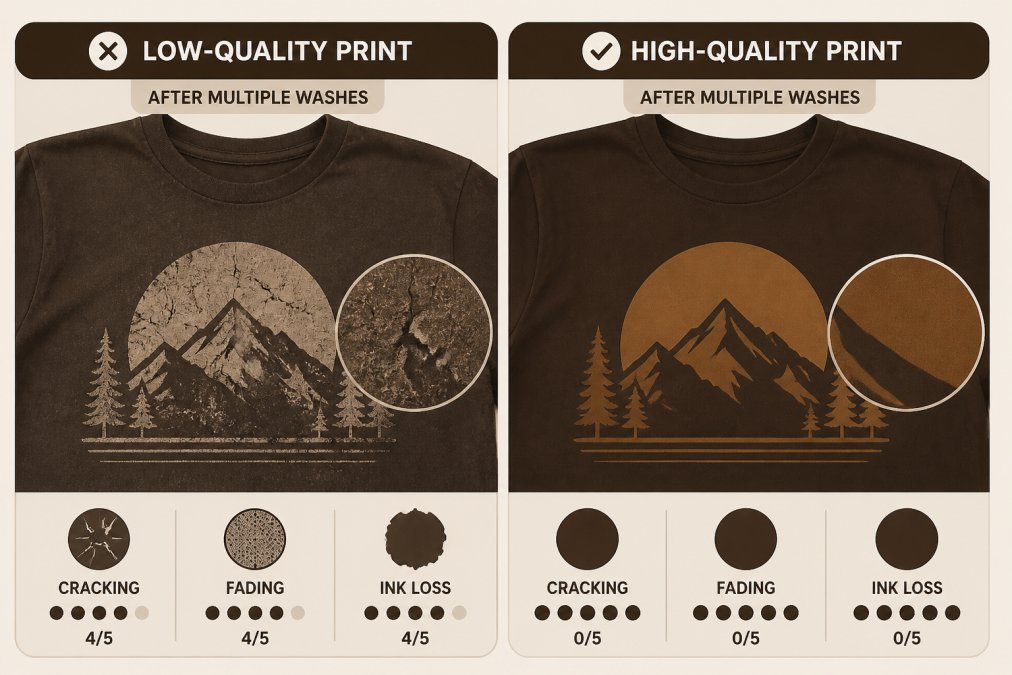
How the graphic gets onto the shirt matters as much as the shirt itself. Screen printing creates a separate screen for each color, pushing ink through onto the fabric. This thick, vibrant layer sits on top of the shirt and can last hundreds of washes when properly cured.
Direct-to-garment printing works like an inkjet printer, allowing photographic detail and unlimited colors without additional screens. However, the ink sits in the fibers rather than on top, making it more susceptible to fading and cracking with repeated washing.
After 20-30 washes, a screen-printed graphic maintains color intensity and structural integrity, while a DTG print begins to fade and may develop cracks, especially at stress points (peer-reviewed research). For high-quality graphic tees, screen printing is superior.
When evaluating a shirt, run your finger across the print. Screen printing feels slightly raised and textured. DTG feels flat and integrated into the fabric.
Construction Details That Signal Quality
Beyond fabric and printing, how the shirt is assembled separates quality from mediocrity.
Taped seams and shoulder tape reinforce shoulder seams with a thin fabric strip that distributes stress across a wider area, preventing separation. Run your finger along the inside shoulder seam, if you feel a thin fabric strip, that's quality construction.
Double-needle stitching on hems and cuffs uses two parallel lines of thread, so if one breaks, the other holds. Check the hem and sleeve cuffs, two visible stitch lines indicate quality.
Tubular construction eliminates side seams entirely by knitting the shirt as a continuous tube, creating a cleaner look and eliminating a stress point where seams typically fail.
Neckline integrity matters because the neck opening experiences constant stress. Quality tees reinforce the neckline with a ribbed collar that's properly attached with tight, even stitching.
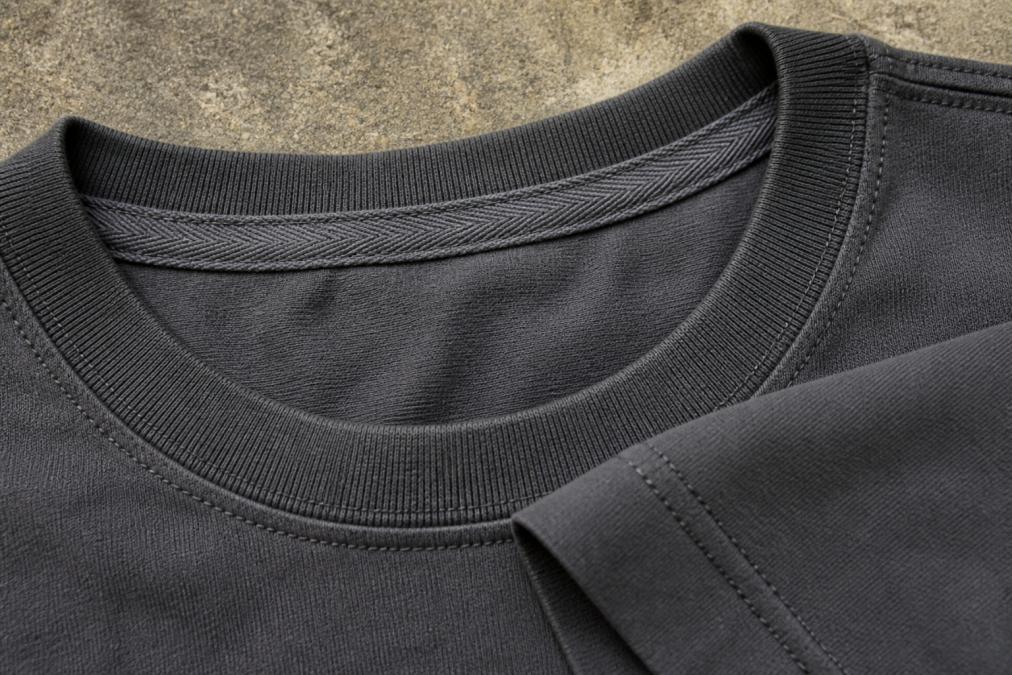
Garment-dyed construction means the entire garment is dyed after assembly, creating even color saturation, softer hand-feel, and authentic vintage appearance. FurEver Tees garment-dyes after construction to achieve that worn-in softness from day one.
Preshrinking removes excess shrinkage before cutting, preventing your shirt from dramatically changing size after the first wash. Check product descriptions for "preshrunk" labeling.
How to Wash Graphic Tees Properly to Extend Print Life
How you care for a graphic tee determines whether it lasts two years or ten.
Turn the shirt inside out before washing to protect the graphic from direct friction and detergent exposure. Use cold water, not hot, which breaks down dyes and weakens fibers. Wash on a gentle cycle using slower spin speeds and reduced agitation. Avoid bleach and oxygen-based cleaners that break down fabric and ink. Dry flat or hang dry when possible, high heat causes shrinkage and fading. Wash with similar colors to prevent color transfer, especially in the first few washes.
These practices extend the life of even moderately-priced shirts and make quality tees last indefinitely.
Red Flags: Signs of Low-Quality Manufacturing
Thin, papery fabric that feels insubstantial will pill, fade, and develop holes within months. Uneven or irregular stitching suggests rushed manufacturing and quality control failures. Loose or missing labels indicate poor attention to detail. Thin, flat prints suggest DTG printing with inadequate curing. Visible side seams on a "premium" tee indicate the manufacturer didn't invest in tubular construction. Inconsistent dyeing across the shirt suggests poor quality control. Cheap-feeling collar that's loose or poorly attached will fail quickly. No preshrinking information suggests the manufacturer didn't properly test shrinkage.
Trust your instincts, if something feels cheap or poorly made, it probably is.
Conclusion
Spotting high quality graphic tees requires understanding fabric weight, fiber composition, print durability, and construction techniques. The difference between a shirt that lasts two years and one that lasts ten comes down to these specific, measurable factors.
When you invest in quality, you're paying for ring-spun heavyweight cotton that feels better and lasts longer, screen printing that maintains color vibrancy through dozens of washes, and taped seams, double-needle stitching, and proper preshrinking that preserve fit and appearance.
FurEver Tees builds every graphic tee with these standards in mind. Our tees use 100% ring-spun US cotton at 180+ GSM, screen-printed designs, taped shoulder seams, double-needle stitching, and garment-dyed construction. The result is apparel that celebrates your pet's personality while actually lasting long enough to become a favorite. Start with the Fabric Textile Cat T-Shirt or the Chihuahua Cowboy T-Shirt and experience the difference that quality construction makes.


Frequently Asked Questions
Q: How do you tell if a t-shirt fabric is high quality?
A: High quality t-shirt fabric starts with the fiber content and weight. Look for 100% ring-spun cotton or quality blends, and check the GSM (grams per square meter), anything above 150 GSM indicates a heavier, more durable shirt. Feel the fabric in person if possible; premium tees have a soft, consistent hand-feel without stiffness. Pre-shrunk fabric that retains its shape after washing is another sign of quality construction.
Q: What printing methods are used for high-quality graphic tees?
A: Screen printing and direct-to-garment (DTG) are the two main methods for quality graphic tees. Screen printing offers excellent durability and vibrant colors through multiple ink layers, ideal for bold designs. DTG provides detailed, photographic-quality prints with excellent color saturation and wash-fastness when properly cured. Both methods, when done correctly, create prints that resist cracking and fading through regular washing.
Q: How can you prevent graphic tees from cracking after washing?
A: Proper care is essential for print longevity. Wash inside-out in cold water with like colors, use gentle detergent, and skip the dryer, air dry instead. High heat damages both fabric and print curing. Quality graphic tees with proper ink saturation and curing resist cracking better than cheaply made alternatives. FurEver Tees products use ring-spun cotton and professional printing techniques that withstand regular washing when cared for properly.
Q: Does the weight of a t-shirt indicate better quality?
A: Yes, generally. Heavier t-shirts (measured in GSM) tend to be more durable and longer-lasting than lightweight alternatives. A quality graphic tee typically weighs 150-200+ GSM, which provides better structure, resists pilling, and maintains its shape through multiple washes. Heavier fabric also feels more substantial and comfortable against the skin, offering better breathability and stretch recovery compared to thin, flimsy alternatives.
The real question isn't whether you can afford quality, it's whether you can afford to replace cheap shirts repeatedly. Once you understand what to look for, the choice becomes obvious.
This article was written using GrandRanker