

Table of Contents
- Why Sustainable Apparel for Cat Lovers Matters
- Eco-Friendly Fabrics for Graphic Tees: What to Look For
- Sustainable Fashion Certifications That Actually Mean Something
- How to Tell if Clothing Is Sustainable Before You Buy
- Our Picks: Sustainable Cat Tees and Totes
- Making Your Cat Apparel Last: Care and End-of-Life
- Build a Capsule Wardrobe Around Your Cat Person Style
- Shop Sustainable Apparel for Cat Lovers
- Frequently Asked Questions
Last Updated: September 8, 2026
Sustainable apparel for cat lovers is no longer a niche afterthought; it is a direct answer to how your wardrobe reflects your values. The fast-fashion model behind cheap graphic tees often relies on synthetic fabrics and opaque supply chains, creating a significant environmental footprint. For the conscious consumer, the choice of fabric and manufacturing process matters as much as the design itself. At FurEver Tees, we believe your love for your pet should extend to how that garment was made, which is why we offer high-quality graphic t-shirts and tote bags in our curated collection.
Shoppers are increasingly scrutinizing labels for eco-friendly materials and asking tough questions about who made their clothes and under what conditions. This guide cuts through the greenwashing to show you exactly how to identify sustainable apparel, what certifications carry real weight, and how to build a durable, expressive wardrobe that honors both your cat and the planet.
Why Sustainable Apparel for Cat Lovers Matters
The biggest mistake in this niche is assuming a cute design justifies a poorly made shirt. When you buy a cheap novelty tee, you are often funding a cycle of textile waste and manufacturing shortcuts that harm workers and the environment. The apparel industry is a major contributor to global carbon emissions, and choosing sustainable fashion is a direct way to reduce your personal impact (unep.org).
For pet owners, the connection is more personal. You advocate for the well-being of your animals, so extending that ethic to the clothing on your back creates a consistent consumerism philosophy. It means supporting brands that use non-toxic dyes and ethical sourcing, ensuring your joy in wearing a cat-themed tee doesn't come at the expense of someone else's health or habitat.
Eco-Friendly Fabrics for Graphic Tees: What to Look For
When evaluating the sustainability of a graphic tee, the fiber content is your first clue, but not all 'eco-friendly' claims are equal. Here is a breakdown of the materials you will actually encounter, ranked by their real-world environmental impact.
Organic cotton is the gold standard for everyday wear, but the label alone is not enough. Look for certification to the Global Organic Textile Standard (GOTS), which verifies the cotton is grown without synthetic pesticides or fertilizers and that the entire supply chain meets strict environmental and social criteria. Conventional cotton is one of the most pesticide-intensive crops in the world, consuming roughly 16% of global insecticides. Organic cotton eliminates that burden, protects soil health, and uses significantly less water in many regions. For a graphic tee, also check for ring-spun organic cotton, which creates a softer, stronger yarn that resists pilling and holds vibrant prints better.
Recycled polyester is a more complicated proposition. While it diverts plastic bottles from landfills and reduces reliance on virgin petroleum, the fabric still sheds microplastics during every wash. If you choose recycled polyester, look for the Global Recycled Standard (GRS) certification, which ensures the recycled content is traceable (textileexchange.org). But for a truly eco-friendly wardrobe, prioritize natural fibers that are biodegradable.
Hemp fiber is a standout choice that most competitors overlook. It grows rapidly with minimal water, requires no pesticides, and actually improves soil health by aerating it with its deep roots. Hemp fabric is naturally antimicrobial, UV-resistant, and gets softer with each wash. The trade-off is that hemp can feel rougher initially and wrinkles more easily, though blends with organic cotton mitigate both issues.
Bamboo fabric requires careful scrutiny. While bamboo itself is a fast-growing, renewable grass, the common manufacturing process, viscose or rayon, uses harsh chemicals like sodium hydroxide and carbon disulfide. The result is a fabric that is soft but heavily processed. Look for 'closed-loop' bamboo lyocell (often branded as Tencel™ Lyocell), which recaptures and reuses those solvents, or mechanically processed bamboo, which is rarer and more expensive. A GOTS or OEKO-TEX Standard 100 certification indicates that harmful residues have been tested and eliminated (oeko-tex.com).
Finally, examine the fabric weight and construction. A heavyweight knit (typically 5.5 oz or heavier) with double-needle stitching signals durable construction, meaning the shirt will last for years. Garment-dyed finishes, where the shirt is dyed after being sewn, not only create that broken-in vintage softness but also reduce water usage compared to piece-dyeing. Prioritize these structural details alongside the fiber content to ensure your cat-themed tee is genuinely built to last.
Sustainable Fashion Certifications That Actually Mean Something
Navigating certifications can feel like decoding a secret language, but a few labels genuinely indicate ethical manufacturing. The Global Organic Textile Standard (GOTS) is the leading certification for organic fibers, verifying that the entire supply chain meets strict environmental and social criteria. If you see a GOTS label, you know the garment is free of harmful chemicals and produced in fair working conditions.
Fair Trade certification focuses on the human element, ensuring farmers and factory workers receive fair wages and safe working environments. While these certifications can slightly raise the price, they are the most reliable markers of a brand's commitment to sustainability. Be wary of vague claims like "eco-friendly" without third-party backing; that is often a sign of greenwashing rather than a genuine commitment to circular fashion.
How to Tell if Clothing Is Sustainable Before You Buy
You do not need a chemistry degree to vet a garment, but you do need a systematic approach. Most shoppers rely on vague feelings about 'eco-friendly' branding, which is exactly what greenwashing exploits. Here is a five-point verification protocol that goes beyond surface-level claims.
Step 1: Decode the fiber label with a critical eye. Check the fabric composition breakdown. If it is over 50% synthetic (polyester, nylon, acrylic), it will eventually shed microplastics into waterways. If it is cotton, is it labeled '100% organic'? If not, it is likely conventional cotton, which is a pesticide-heavy crop. But do not stop at the fiber, look for the specific certification marks printed on the care label or hang tag. A GOTS logo, Fair Trade Certified seal, or OEKO-TEX Standard 100 mark carries third-party weight. If you see only the words 'eco-friendly' or 'sustainable' without a certification mark, treat that as a red flag.
Step 2: Investigate the brand's supply chain trail. Go beyond the About Us page. Look for a dedicated sustainability page that names specific factories, countries of production, and audit results. A brand that practices genuine supply chain transparency will usually publish its supplier list or at least discuss its tier-2 processing (dyeing, finishing) alongside tier-1 assembly. If the brand only mentions 'ethical factories' without naming them or providing certifications, that is a warning sign.
Step 3: Check for the 'microplastic test' on synthetics. If the garment contains any synthetic fiber, ask whether the brand has tested for microfiber shedding. Some brands now use specialized filtration in their washing tests or apply finishes that reduce shedding.
Step 4: Perform the tactile and weight check. Feel the fabric between your fingers. A heavier, garment-dyed shirt (5.5 oz or more) often indicates a slower production process that prioritizes quality over speed. Hold it up to the light, if you can see through the knit, it is likely a thin, fast-fashion grade that will lose its shape after a few washes. Check the seams: double-needle stitching at the shoulders and hem is a hallmark of durable construction.
Step 5: Trace the end-of-life path before you buy. Before purchasing, ask yourself: What happens to this garment in five years? If it is 100% natural fiber (organic cotton, hemp, lyocell), you can compost it at home or send it to a textile recycler. If it is a blend, it becomes much harder to recycle. Look for brands that offer take-back programs or partner with textile recycling services. A garment with a clear end-of-life pathway is inherently more sustainable than one that will end up in a landfill.
Our Picks: Sustainable Cat Tees and Totes
Putting this into practice, we have curated a selection of pieces that meet these high standards without sacrificing style. Our Cat Mona Lisa white T-Shirt is built from 100% ring-spun US cotton and garment-dyed after construction, giving it that broken-in, vintage softness from the very first wear. The heavyweight knit and double-needle stitching ensure it holds its shape through countless washes.

For those who love celestial aesthetics, the Celestial Sun & Moon Phases Cat T-Shirt offers a relaxed fit and a muted, tactile color achieved through a garment-dyed finish. It drapes like a favorite shirt you have owned for years, blending a gentle sun-and-moon motif with a subtle lunar phase arc.
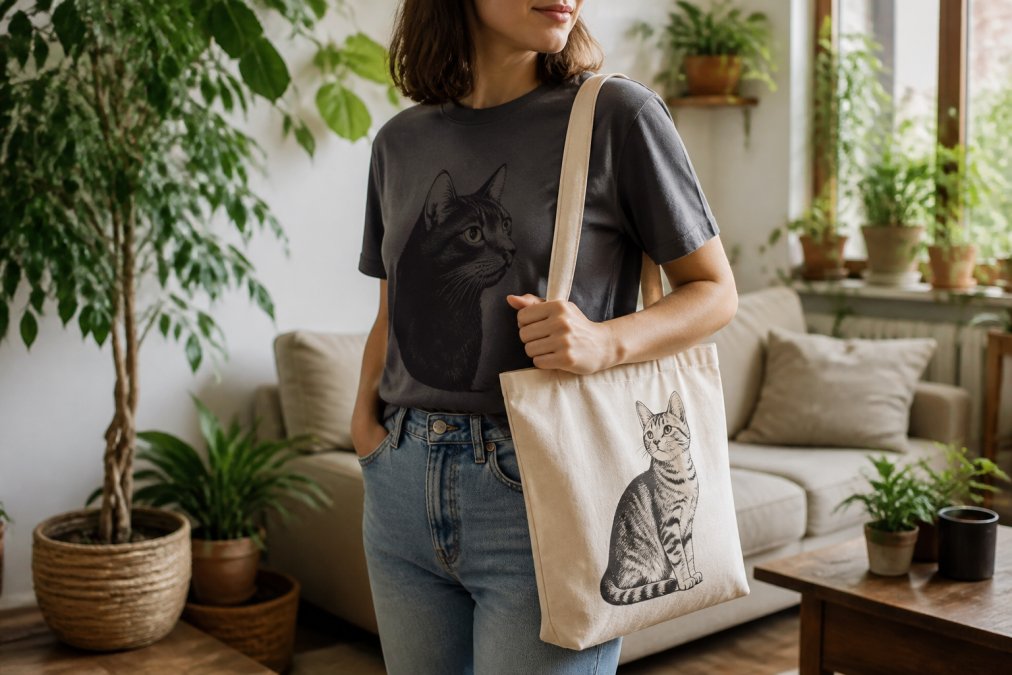
To complete the look, our "My Favorite Title Is Cat Mom" Tote Bag is the perfect eco-conscious companion. It is a lightweight but sturdy cotton canvas tote that carries your daily rituals with quiet charm. This is the kind of bag you can take to the farmer's market or use as a book bag tote, knowing the heavy 12 oz canvas will hold up for years. For a more minimalist vibe, the Unbothered Cat Face Tote Bag features a whisper-soft cat face on natural canvas.
| Product | Material & Construction | Price | Best For |
|---|---|---|---|
| Cat Mona Lisa White T-Shirt | 100% ring-spun US cotton, garment-dyed | $26.99 | Vintage softness and durability |
| Celestial Sun & Moon Phases Tee | Heavyweight knit, garment-dyed finish | $29.99 | Relaxed fit with a celestial design |
| "My Favorite Title Is Cat Mom" Tote | Heavy 12 oz cotton canvas | $27.99 | Everyday errands and market trips |
| Unbothered Cat Face Tote | Sturdy natural canvas | $27.99 | Minimalist, quiet style |
Making Your Cat Apparel Last: Care and End-of-Life
Even the best sustainable apparel will fail prematurely if you do not care for it properly. The most common mistake is washing on hot cycles and using a dryer, which breaks down fibers and causes prints to crack. To extend the life of your garment, wash in cold water and hang it to dry. This preserves the color and the integrity of the fabric, reducing your need to replace items frequently.
When a shirt has finally reached the end of its life, do not toss it in the trash. Textile waste is a massive problem in landfills. Instead, consider upcycled materials projects, turning old tees into cleaning rags or quilts. This end-of-life garment management is a crucial step in the circular fashion model, ensuring your apparel longevity benefits the planet even after you are done wearing it.
Build a Capsule Wardrobe Around Your Cat Person Style
The ultimate goal of sustainable fashion is owning fewer, better things. A capsule wardrobe approach means selecting versatile pieces that mix and match, reducing the urge for impulse buys. For the cat mom aesthetic, this might mean investing in two or three high-quality graphic tees that you rotate with classic jeans or trousers, rather than a drawer full of novelty shirts you rarely wear.
Size inclusivity is a critical part of this equation. A sustainable wardrobe only works if the clothes fit well and make you feel confident. Look for brands that offer many sizes and use relaxed-fit cuts that flatter different body types. By choosing pieces with embroidered details or classic kawaii design over fleeting trends, you ensure your apparel remains a beloved part of your wardrobe for years.
Shop Sustainable Apparel for Cat Lovers
Making the switch to sustainable apparel for cat lovers is a journey, not a destination. It requires a shift in mindset from quantity to quality, and from trend-chasing to timeless style. By prioritizing durable construction, ethical manufacturing, and eco-friendly materials, you are making a powerful statement about who you are and what you value.
At FurEver Tees, our designs are inspired by real-life pet relationships, capture the joy and personality of your cat while standing up to the rigors of daily life. Our designs, inspired by real-life pet relationships, capture the joy and personality of your cat while standing up to the rigors of daily life. Whether you are looking for a bold graphic tee or a sturdy canvas tote, our collection is built to last and designed to celebrate the unique bond between humans and their pets.
Frequently Asked Questions
What are the most eco-friendly fabrics for graphic tees?
Organic cotton, hemp fiber, and recycled polyester top the list. Organic cotton skips the toxic pesticides and uses less water than conventional cotton. Hemp grows quickly with minimal inputs and gets softer with each wash. Recycled polyester gives plastic bottles a second life, though it still sheds microplastics. For graphic tees, look for a heavyweight organic cotton or a cotton-hemp blend that holds prints well and lasts through many washes.
How can I tell if a clothing brand is truly sustainable?
Look for third-party sustainable fashion certifications rather than marketing claims. The Global Organic Textile Standard (GOTS) verifies organic fiber content and ethical manufacturing. Fair Trade certification ensures workers receive fair wages. A brand that discusses its supply chain transparently, names its factories, and explains its materials is usually more credible than one using vague terms like 'green' or 'eco.'
What should I look for when buying sustainable cat-themed clothing?
Check the fabric composition first, aiming for organic cotton, hemp, or recycled fibers. Then look at the print: water-based inks and non-toxic dyes are better for the environment and feel softer on skin. Examine the construction, including double-needle stitching and durable fabric weight, since a tee that lasts five years creates far less waste than three cheap ones. Finally, confirm the brand uses ethical manufacturing with third-party certifications.
Is sustainable apparel for cat lovers more expensive?
Sustainable apparel often costs more upfront because organic fibers, fair wages, and durable construction all carry higher price tags. A $27 tote made from heavy 12 oz organic cotton canvas will outlast several $10 fast-fashion versions. When you divide the cost by the number of wears, sustainable pieces usually come out ahead. You are paying for better materials, ethical labor, and a garment designed to be kept, not discarded.
The challenge is to look past the cute design and ask where your clothes come from. We believe you should not have to choose between style, comfort, and your values. Explore our collection of premium graphic t-shirts and tote bags, and wear your heart on your sleeve with pieces that are as good for the planet as they are for your wardrobe. Get started with FurEver Tees and find apparel that honors your furry companion every single day.