

Table of Contents
- What Makes Pet Apparel Truly Sustainable
- How to Tell If Clothing Is Sustainable
- Sustainable Fashion Certifications That Actually Matter
- Eco-Friendly Graphic Tees for Pet Lovers: Top Picks
- Cost-Per-Wear: Why Durable Pet Apparel Wins
- End-of-Life Disposal and Recycling Programs
- Frequently Asked Questions
Last Updated: September 13, 2026
What Makes Pet Apparel Truly Sustainable
Sustainable pet apparel minimizes environmental harm across its lifecycle, from fiber sourcing through manufacturing, use, and disposal. This guide to the best sustainable pet themed apparel brands from FurEver Tees separates genuine eco-conscious labels from those merely borrowing green language.
An organic cotton shirt still carries a heavy footprint if it's dyed with toxic chemicals, sewn in a facility paying poverty wages, and shipped across an ocean to be worn twice. True sustainability requires honesty at every stage.
The Sustainability Scorecard: Materials, Labor, and End of Life
Evaluate any pet-themed garment against three pillars. Materials: recycled polyester, organic pima cotton, upcycled fabrics, and plant-based materials like hemp or Tencel reduce virgin resource extraction. Labor: ethical manufacturing means verified fair wages and safe conditions, often signaled by fair trade certification. End of life: can the item biodegrade, or does the brand offer take-back programs?
| Pillar | What to Look For | Red Flag |
|---|---|---|
| Materials | Recycled fibers, organic cotton, non-toxic dyes | Vague "eco" claims with no fiber details |
| Labor | Fair trade certification, supply chain transparency | No information about where or how it's made |
| End of Life | Biodegradable fabrics, recycling programs | No disposal guidance whatsoever |
Most brands excel at one pillar and ignore the others. A brand using recycled polyester but hiding its supply chain is only partially sustainable.
How to Tell If Clothing Is Sustainable
Determining whether clothing is sustainable requires looking past marketing language to verifiable facts about materials, manufacturing, and certifications. Work through four layers of evidence in order, and stop trusting any brand that fails at layer one.
Layer 1: The Fiber Itself
Start with the fabric label, but read it critically. "100% cotton" tells you nothing about pesticides or water use; "organic cotton" or "recycled polyester" gives you something concrete to verify. For pet-themed apparel, the fiber choice drives both environmental impact and how the garment behaves around animals.
A useful comparison most competitors skip:
| Fiber | Typical Climate Profile | Pet-Relevant Trade-off |
|---|---|---|
| Organic cotton | Lower pesticide load, high water use | Soft, breathable, but holds odors longer |
| Recycled polyester | Diverts plastic waste, lower virgin resource use | Wicks moisture well, but sheds microfibers in the wash |
| Hemp | Low water and pesticide needs, durable | Rougher hand feel until broken in; excellent for outerwear |
| Tencel (lyocell) | Closed-loop solvent process | Silky and cooling, but less abrasion-resistant for active pets |
No single fiber wins on every metric. A hemp-cotton blend outer layer paired with a Tencel base layer often outperforms a single-fiber "100% eco" claim.
Layer 2: The Dye and Finish
Organic cotton still carries a heavy footprint if it's dyed with toxic chemicals. Look for low-impact or fiber-reactive dyes and OEKO-TEX Standard 100 testing on the finished textile; garment-dyed and naturally pigmented fabrics use less water than piece-dyed alternatives.
Layer 3: The Supply Chain
Check the brand's website for a sustainability page naming specific factories, countries, and certifications rather than vague terms like "eco-friendly." A brand that cannot name its cut-and-sew facility is almost certainly not auditing it.
Layer 4: Allergy-Friendly and Sensitive-Skin Considerations
Pet-themed apparel diverges from human fast fashion here. Pets with sensitive skin, and owners who react to residual chemicals, benefit from:
- GOTS-certified organic cotton, restricts azo dyes and formaldehyde finishes
- Undyed or naturally dyed fabrics, fewer residual processing chemicals
- OEKO-TEX Standard 100 certified textiles, tested for harmful substances at the finished-goods stage
- Avoiding "wrinkle-free" or "stain-resistant" finishes, these often rely on PFAS or formaldehyde chemistry
If your dog has a known contact allergy, the safest starting point is an undyed GOTS cotton or a Tencel blend, washed once before first use.
Red Flags That Signal Greenwashing
Greenwashing is the practice of making misleading environmental claims to appear more sustainable than a product actually is. The FTC's Green Guides provide the legal framework for what companies can and cannot claim about environmental benefits.
Watch for these warning signs:
- Vague language like "natural" or "green" without specifics
- Imagery of leaves and earth tones substituting for actual data
- No mention of supply chain, factories, or labor conditions
- Claims about one small feature while ignoring the bigger picture
- No third-party certification to back up assertions
- A "sustainable" collection that is a small fraction of the brand's total output
Run the cost-per-wear math before you decide a sustainable tee is too expensive. A $30 shirt worn 100 times costs $0.30 per wear; a $15 shirt worn 10 times before fading costs $1.50 per wear. Durability is the quietest sustainability claim a brand can make, and the easiest to verify.
Sustainable Fashion Certifications That Actually Matter
Certifications provide third-party verification that a brand meets specific environmental or labor standards. The trap is treating all badges as equivalent, a single logo on a hangtag tells you almost nothing until you know what it audits.
What Each Certification Actually Verifies
- GOTS (Global Organic Textile Standard): Verifies organic fiber content from harvest through finished product, restricts toxic chemicals in processing, and includes social criteria for workers. Covers the whole supply chain, which is why it is the strongest single badge for a cotton pet tee.
- GRS (Global Recycled Standard): Verifies recycled content and tracks it through the supply chain, and adds social and environmental criteria at each stage. This is the badge to look for on recycled polyester pet raincoats.
- OEKO-TEX Standard 100: Tests the finished textile for harmful substances, it does not verify organic content or labor conditions. Useful for sensitive-skinned pets, but it is a chemical-safety badge, not a sustainability badge.
- Fair Trade Certified: Confirms fair wages and safe working conditions at every stage. It says nothing about fiber or dye chemistry, so pair it with a materials certification.
- B Corp: Indicates a company meets high social and environmental performance standards across its whole operation. It is a company-level badge, not a product-level one, a B Corp can still sell a conventional cotton shirt.
- bluesign®: Focuses on chemical management and resource efficiency in textile manufacturing. Common in performance outerwear, including pet rain gear.
How to Verify a Badge Is Real
A logo on a product page is not proof. Most certification bodies maintain public databases:
- Note the certification number, which is usually printed near the logo or on the hangtag.
- Look up the brand or facility in the certifying body's online directory.
- Confirm the scope, a GOTS logo on a tote bag does not mean the brand's entire catalog is GOTS-certified.
- Check the date. Certifications expire and must be renewed annually or biennially.
A brand with multiple certifications across different areas demonstrates broader commitment than one with a single badge. Certifications cost money and require audits, so brands that invest in them are typically serious, but the badge only matters if it covers the product you are actually buying.

For pet-themed apparel, the strongest combination is a materials certification (GOTS or GRS) plus a chemical-safety certification (OEKO-TEX Standard 100 or bluesign®). A labor certification (Fair Trade Certified) on top of those is the mark of a brand doing the full job rather than the easy part.
End-of-Life and Take-Back Programs
Most guides stop at the purchase and never explain what to do with a pet tee once your dog outgrows it or the fabric wears thin. That is the real test of a circular brand.
Ask two questions before you buy:
- Does the brand offer a take-back or trade-in program? A growing number of apparel companies accept worn items for resale, repair, or fiber recycling, sometimes in exchange for store credit.
- Is the fiber actually recyclable in your area? Natural fibers like cotton and hemp biodegrade under the right conditions. Synthetic blends do not, and most municipal textile recycling programs cannot separate blended fibers.
A practical end-of-life checklist for any pet-themed garment:
- Repair minor damage before replacing the item
- Repurpose worn tees as cleaning rags or pet-bed liners
- Donate wearable items to local shelters or thrift stores
- Use textile recycling bins where available
- Compost 100% natural-fiber items if your local facility accepts textiles
- Check the brand's take-back page before discarding
The EPA's textile waste guidance notes that textiles represent a significant portion of municipal solid waste, and reusing or recycling them reduces landfill burden. The brand that helps you do that is more sustainable than the one that only sells you the shirt.
Eco-Friendly Graphic Tees for Pet Lovers: Top Picks
The best sustainable pet themed apparel brands pair eco-friendly materials with designs celebrating the human-animal bond. FurEver Tees leads this category with garment-dyed cotton tees that prioritize durability and ethical sourcing.
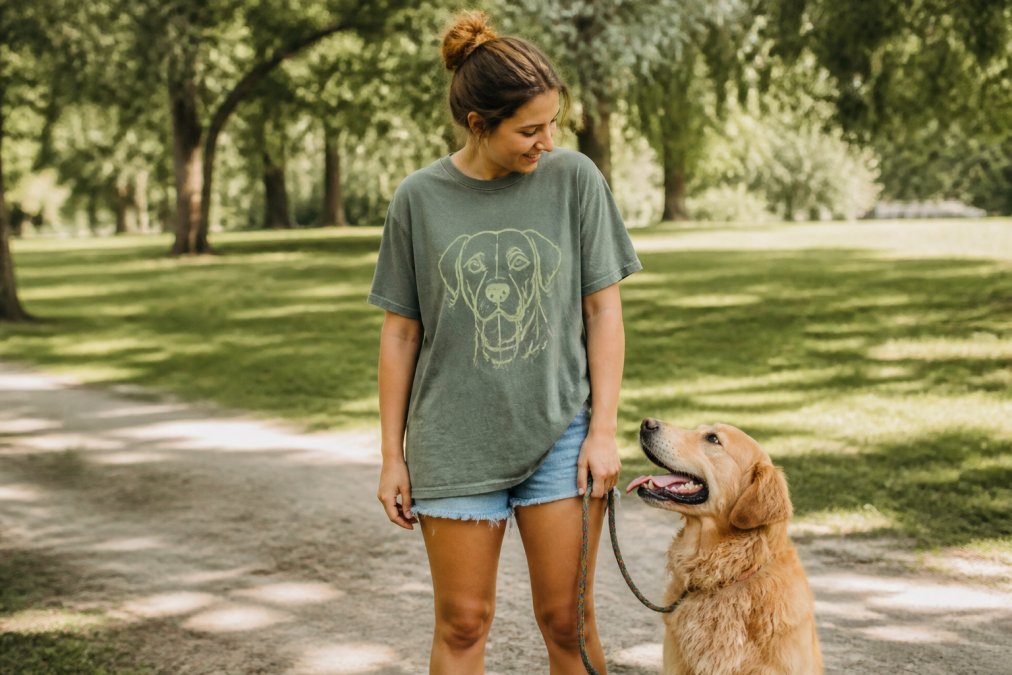
FurEver Tees: Garment-Dyed Cotton Built to Last
FurEver Tees earns the top spot for pet lovers who want apparel that lasts. Its tees use 100% ring-spun US cotton, garment-dyed after construction for a worn-in feel that doesn't fade after a few washes, and tubular construction eliminates side seams, reducing fabric waste.
The Textile Exchange's Preferred Fiber Report notes that cotton production carries significant environmental weight, making durability essential. A shirt that lasts five years has one-fifth the annual impact of a fast-fashion alternative replaced every year.
Specific picks worth considering:
- Fabric Textile Cat T-shirt ($29.99): Heavyweight cotton with a relaxed fit, available S-3XL
- Proud Dog Mama T-Shirt ($29.99): Patchwork-style pup illustration on garment-dyed fabric
- Dog Mom T-Shirt, Cute Row of Dogs Graphic Tee ($31.99): A row of friendly pups in mellow garment-dyed color
- We All Thrive Under Different Conditions Dog Lover T-Shirt ($29.99): Hand-illustrated garden of nine different pets with an inclusive message
Each shirt is pre-shrunk with double-needle stitching and a tagless label. Garment-dyeing gives colors depth printed-on designs can't match, and the heavyweight cotton holds up to repeated washing.

Canvas Totes and Everyday Carry for Pet Parents
For pet parents who want to carry their love visibly, FurEver Tees offers heavy 12 oz cotton canvas totes at $27.99. Flat-corner construction keeps the silhouette slim, reinforced self-fabric handles handle grocery runs, and the natural or black colorways work with any outfit.
Standout options include:
- "My Favorite Title Is Cat Mom" Tote Bag: Hand-illustrated cat scene with the sweet title line
- "Being a Dog Mom Is My Superpower" Tote Bag: Golden retriever family illustration with a basket of treats
- French Bulldog Watercolor Tote Bag: Soft watercolor-style leaping dog illustration
- Dog Nose Tote Bag ("Sniff"): Minimal graphite muzzle with a single red dot
- Tote Bag with Sad Dog Eyes: Hand-drawn wistful eyes from the Expression Collection
- Unbothered Cat Face Tote Bag: Whisper-soft cat face for calm cat lovers
Canvas totes made from natural fibers biodegrade more readily than synthetic alternatives. When a tote reaches end of life, cut off the handles and compost the body if your local facility accepts cotton textiles.
Cost-Per-Wear: Why Durable Pet Apparel Wins
Cost-per-wear is the purchase price divided by the number of times you wear the item. A $30 shirt worn 100 times costs $0.30 per wear; a $15 shirt worn 10 times before fading costs $1.50 per wear. Durability wins on both environmental and financial terms.
This calculation exposes the real cost of fast fashion. Cheap pet-themed tees often use thin cotton blends that pill, fade, and lose shape within months. The upfront savings disappear when you replace the shirt three times in a year.
FurEver Tees shirts are built for repeated washing. Pre-shrunk ring-spun cotton resists shrinkage, double-needle stitching prevents seam failure, and garment-dyed colors hold their depth, translating to more wears per dollar and fewer items in the landfill.
| Factor | Fast-Fashion Tee | Durable Garment-Dyed Tee |
|---|---|---|
| Typical lifespan | 10-20 washes | 100+ washes |
| Cost per wear | Higher over time | Lower over time |
| Environmental impact | Repeated replacement | Single purchase, extended use |
End-of-Life Disposal and Recycling Programs
Most clothing eventually wears out, and how you dispose of it determines whether the materials get a second life or end up in a landfill. Cotton and canvas items can be recycled through textile salvage programs in many communities.
The EPA's textile waste guidance notes that textiles represent a significant portion of municipal solid waste, and reusing or recycling them reduces landfill burden. Before discarding any pet-themed apparel:
- Check if the item can be repaired or repurposed as a cleaning rag
- Donate wearable items to local shelters or thrift stores
- Look for textile recycling bins in your area
- Check if the brand offers a take-back or trade-in program
- Compost natural fiber items if local facilities accept textiles
Natural fibers like cotton canvas and ring-spun cotton biodegrade under the right conditions; synthetic blends do not, another reason to prioritize natural materials when shopping.
The challenge with sustainable pet apparel is separating genuine commitment from marketing. FurEver Tees addresses this with 100% ring-spun US cotton, garment-dyed construction for longevity, and tubular knit designs that reduce fabric waste. Its canvas totes use heavy 12 oz cotton with reinforced stitching, built to carry groceries and gear for years rather than months. For pet lovers who want apparel that honors their bond with their animals while respecting environmental limits, FurEver Tees offers a clear path forward. Shop the collection and wear your pet pride with pieces designed to last.
Frequently Asked Questions
What makes a pet apparel brand truly sustainable?
A truly sustainable pet apparel brand considers the full lifecycle of its products. Look for durable materials like ring-spun cotton or recycled polyester, ethical manufacturing practices, and transparency about supply chains. Brands that use non-toxic dyes, minimize waste through tubular construction, and offer end-of-life recycling programs demonstrate a genuine commitment. Avoid brands that rely on vague claims without third-party verification or specific details about their environmental impact.
What certifications should I look for in sustainable apparel?
Key certifications include Global Organic Textile Standard (GOTS) for organic fibers, Fair Trade Certified for ethical labor, and OEKO-TEX Standard 100 for safe, non-toxic dyes. Bluesign certification indicates responsible chemical management. These third-party verifications ensure a brand meets specific environmental and social criteria, making it easier to distinguish genuine sustainable fashion certifications from marketing claims. Always check the certifying body's website to confirm validity.
How can I tell if clothing is ethically manufactured?
Start by checking the brand's website for supply chain transparency. Ethical brands disclose factory locations, working conditions, and often publish audit reports. Look for Fair Trade certification or membership in organizations like the Fair Labor Association. If a brand cannot answer basic questions about where and how its clothing is made, that is a red flag.
Are there sustainable brands that focus on pet-themed designs?
Yes, several brands specialize in pet-themed apparel with sustainability at their core. FurEver Tees, for example, uses 100% ring-spun US cotton and garment-dyed processes that reduce water waste. Their graphic tees and canvas totes celebrate the human-pet bond while prioritizing durable construction and ethical sourcing. When evaluating pet-themed brands, apply the same sustainability criteria you would to any apparel: materials, certifications, and transparency.
What are the best eco-friendly materials for graphic t-shirts?
Organic cotton, especially ring-spun US cotton, is a top choice because it uses less water and no synthetic pesticides. Recycled polyester from plastic bottles diverts waste from landfills. Tencel lyocell, made from sustainably sourced wood pulp, is soft and biodegradable. For pet-themed apparel, look for garment-dyed processes that reduce water usage and non-toxic, water-based inks. Avoid conventional cotton and polyester blends, which are harder to recycle.